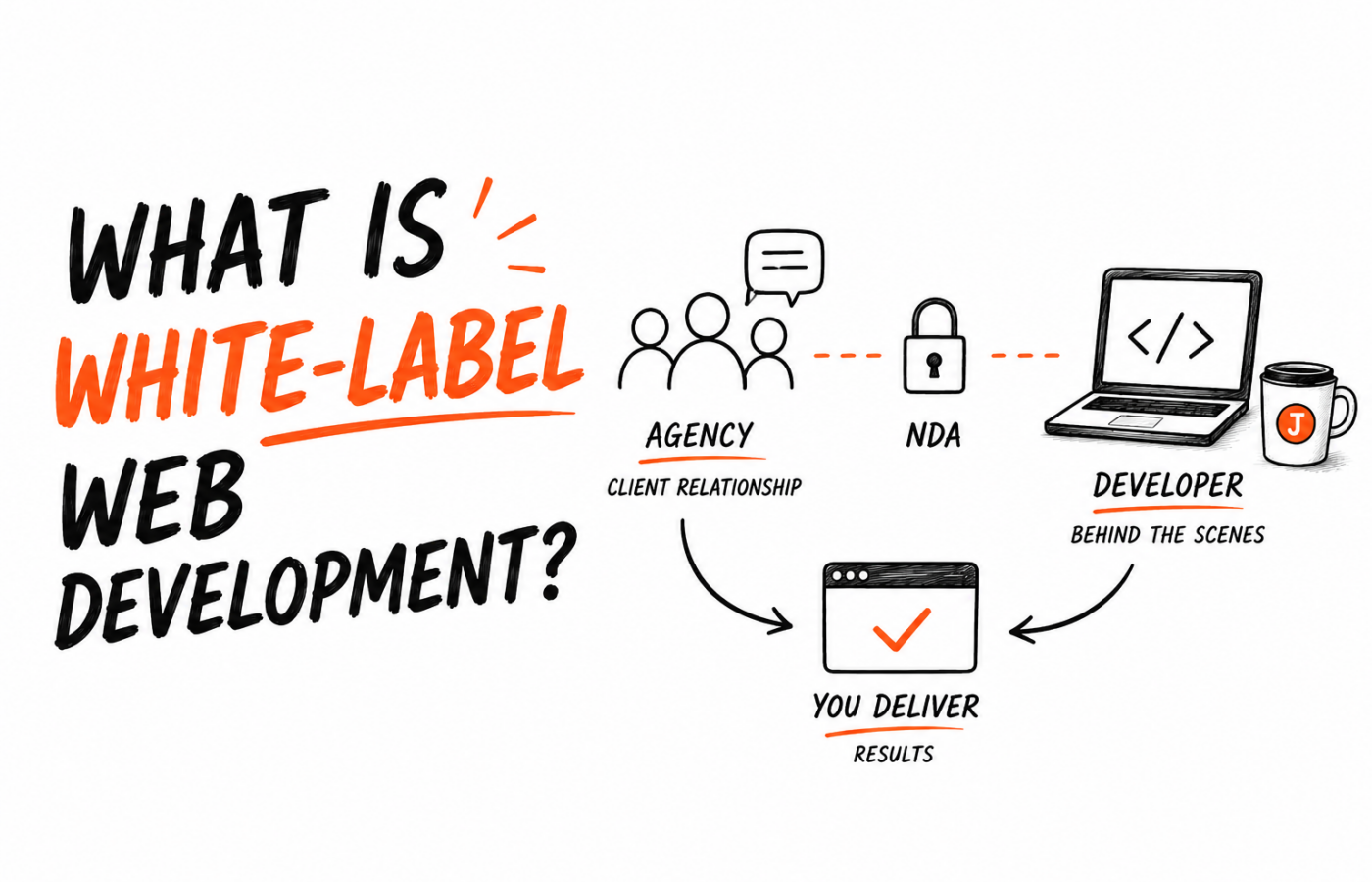
White-label web development is when an agency delivers website work to its clients while a specialist developer builds behind the scenes — usually under the agency’s brand, not the developer’s.
How white-label delivery usually works
-
01
Agency wins and scopes the project
You remain the client-facing lead. Requirements, timelines and commercial terms stay with your studio.
-
02
Developer builds under NDA
The specialist implements the agreed scope quietly — often without appearing in client channels unless you choose otherwise.
-
03
You review and present
You quality-check the work, present to the client, and keep the relationship centralised.
-
04
Handover and support model
Decide who handles post-launch support: retain in-house, continue white-label, or mix both.
Who owns the client relationship?
Almost always: the agency. That is the point. Clients hired your brand, process and accountability. White-label support should strengthen that, not compete with it.
Confidentiality and NDAs
Good white-label partners treat client details, designs and credentials as confidential by default. NDAs and clear repository access rules protect everyone involved.
When outsourcing makes sense
- Your pipeline is fuller than your bench
- You need WordPress depth without a full-time hire
- You want to protect client relationships while scaling delivery
- You have clear briefs and decision-makers
MY TAKE
The best white-label relationships feel boring in the best way: clear briefs, quiet delivery, on-time handovers, and zero drama in the client Slack.
– Josh
Frequently asked questions
Only if you want that. Many white-label arrangements stay fully invisible to the end client.
Models vary: fixed project fees, day rates, or retainers. Agencies typically mark up delivery while owning sales and account management.