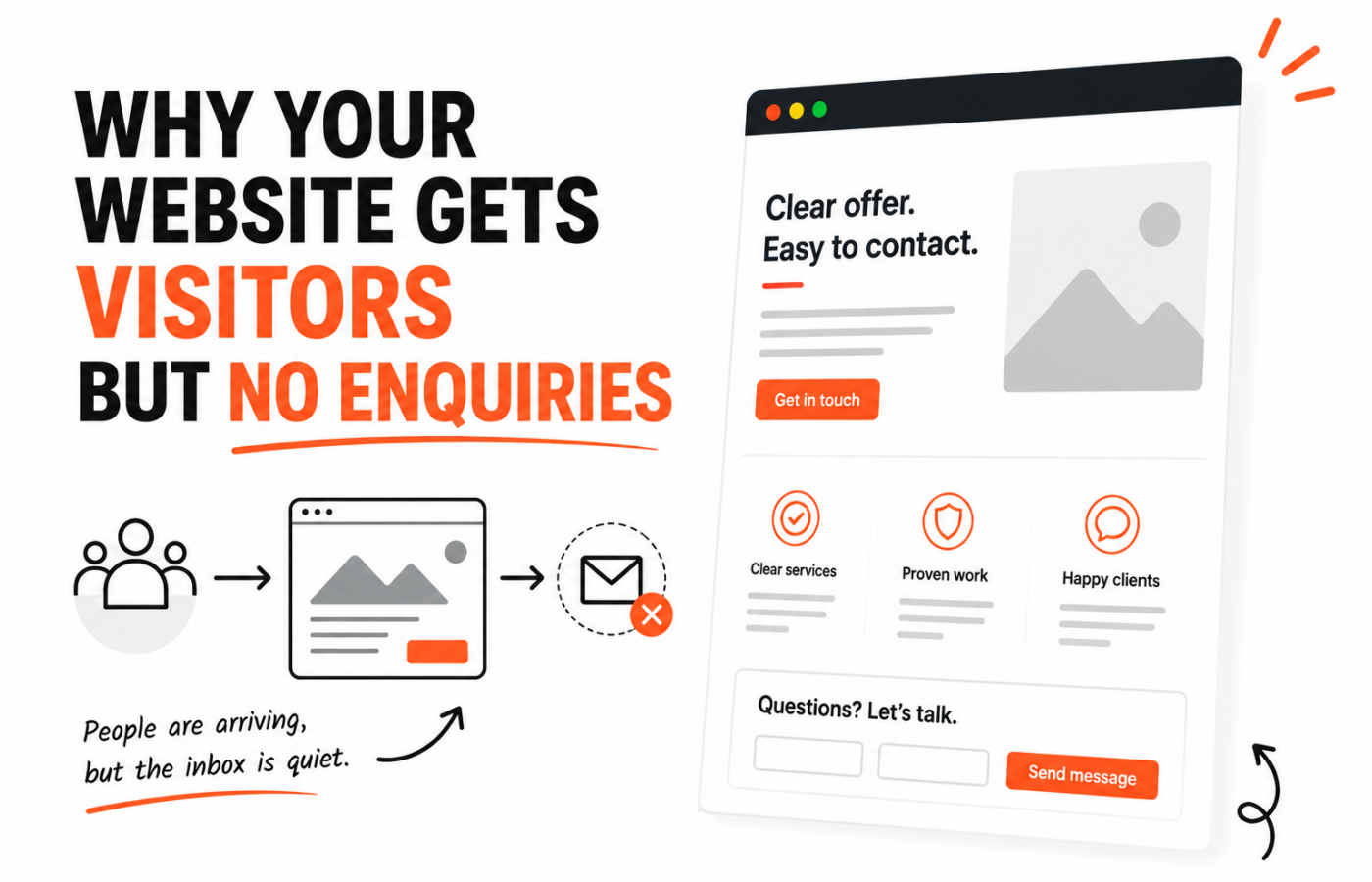
People are finding your website. That's the encouraging part.
The less encouraging part is the empty inbox. You check the visitor numbers again, wonder whether the contact button needs to be bigger, then consider paying for more traffic.
Before spending more, I'd look at what happens between someone arriving and deciding to contact you.
There isn't one fix that applies to every business. Sometimes the website is making things difficult. Sometimes it's attracting people who were never looking to buy. Those need different responses.
Are the right people arriving?
A visitor count doesn't tell you why someone came.
An article answering a broad question might attract plenty of readers who have no need for your service. A campaign might bring people from areas you don't cover. Some reported visits may not represent real potential customers at all.
Start with the pages people land on and the sources bringing them there. Then ask whether that visit makes sense for the work you want.
If you build websites for local businesses, an article about an obscure coding problem could attract other developers. Useful content, perhaps. But a quiet inbox from those visits wouldn't necessarily mean your contact page had failed.
Can someone tell what you're offering?
Read the first screen as though you don't know the business.
“Helping ambitious brands move forward” could mean almost anything. A visitor shouldn't have to browse several pages to discover whether you're a designer, an accountant or a delivery company.
Give them a clear explanation. Then make the supporting detail easy to find.
For a service business, that might mean explaining the type of work you take on and who it's useful for. If location matters, make that obvious too. You can still have personality. Clarity doesn't require writing like an instruction manual.
What's missing before they can decide?
Imagine a potential customer likes the look of your work but has a practical question.
Do you handle small projects? Can they bring an existing design? Will they be able to edit the finished website?
If the answers aren't there, they have to decide whether it's worth contacting you to find out. Some will. Others will keep looking.
You don't need to publish every detail of your process. Start with the questions that repeatedly come up before someone buys, and place the answers close to the relevant service.
Budget can be part of this. You don't have to invent a fixed price for work that genuinely varies. You can explain what affects the quote and what someone needs to send you to get one.
Have you given them a reason to trust you?
“High-quality service” is something any business can write about itself.
Relevant work is more useful. Show what you did and explain enough for someone to understand your contribution. A testimonial can help too, provided it's genuine and you have permission to use it.
A long gallery without context can leave visitors guessing. Were you responsible for the design, the development or a small update? Make the answer clear.
I would rather show a few well-explained projects than fill a page with impressive-looking images that don't tell anyone much.
Try the enquiry yourself
Use your phone. Open the website from a page other than the homepage and attempt to get in touch.
Notice anything that makes you pause. A vague button label. A form asking for information you wouldn't have yet. A required phone number when you'd rather email.
Then actually submit it.
Check the confirmation and the destination inbox. A working-looking form isn't enough if the notification goes somewhere nobody checks. If you also take calls or bookings, make sure your picture of “no enquiries” includes those routes.
Change something you can learn from
You could rewrite every page and redesign the form at once. You might improve things, but you'll struggle to know what helped.
I'd start with the clearest problem. Make the offer understandable, fix the broken enquiry route or improve the page receiving the most relevant visits. Then allow enough time and relevant traffic to judge the result.
A handful of visits is a poor basis for a dramatic conclusion. So is counting every button click as a new lead.
The useful outcome is a real conversation with someone who might be a good fit for the business. Keep that in view when you're deciding what to change.