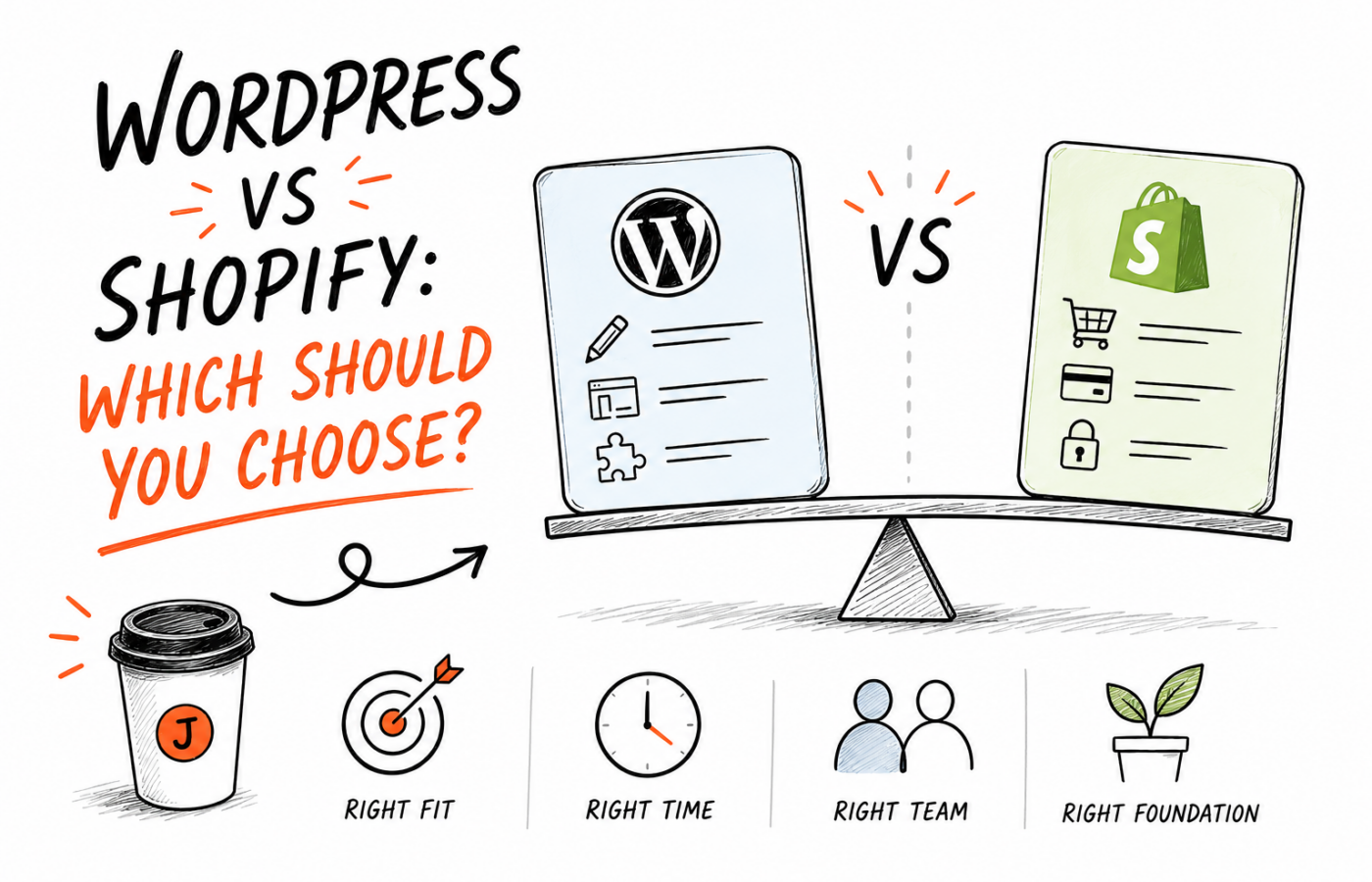
WordPress vs Shopify is one of the most common platform questions in ecommerce. Both can sell products successfully. The better choice depends on your catalogue, content needs, team skills and how much control you want.
Quick pros & cons
Pros
- WordPress: unmatched flexibility for content-heavy brands
- WordPress: wide ecosystem of themes, plugins and developers
- Shopify: fast path to a reliable checkout
- Shopify: less server and security admin day-to-day
Cons
- WordPress: quality depends heavily on how it is built and maintained
- WordPress: more moving parts if nobody owns upkeep
- Shopify: platform fees and app costs can add up
- Shopify: deeper custom or content models can feel constrained
When Shopify is usually the better fit
If your business is primarily a store, you want predictable hosting, and you value a commerce-first admin, Shopify is often the pragmatic choice — especially for teams that do not want to manage WordPress updates and hosting.
When WordPress is usually the better fit
If your site is as much a publishing platform as a shop, you need unusual workflows, or you want broader control over structure and integrations, WordPress can be the stronger long-term foundation — provided it is built and maintained properly.
MY TAKE
I would not choose Shopify simply because someone said it is easier, and I would not choose WordPress simply because I build with it. Start from the business model, then pick the platform that fits with the least unnecessary friction.
← Josh
Frequently asked questions
Yes, but migrations cost time and money. It is better to choose deliberately than to treat the first platform as disposable.
WooCommerce is an ecommerce plugin that runs on WordPress. WordPress alone is a CMS; WooCommerce adds store features.
It depends on apps, themes, development and maintenance. Compare total cost of ownership, not just the monthly platform fee.