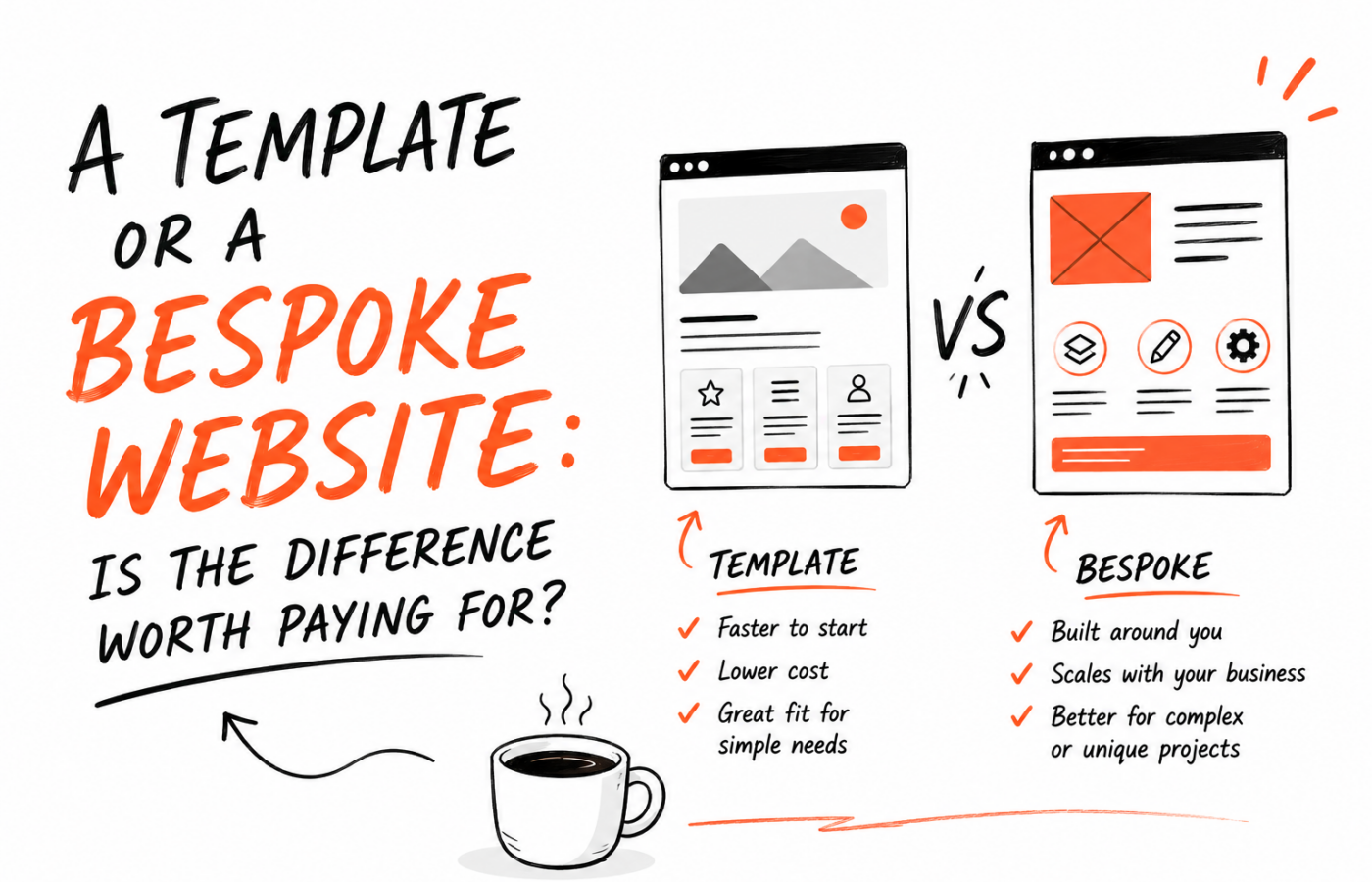
A template can be a very sensible way to build a website.
That might sound like an odd thing for a developer to say in an article about bespoke work. But you don't benefit from paying for custom development simply because someone has made the alternative sound embarrassing.
The useful question is whether the template fits the job, and what it will cost to make it fit if it doesn't.
What you're starting with
A template gives you an existing visual structure. Someone has already made decisions about the page layouts and how the main elements look.
You still need to add the content and configure the website. Depending on the project, there may be a fair amount of design and development work involved in getting it right.
Bespoke work starts with more room to shape the site around your requirements. That could mean an original design, custom content sections or functionality built for the way the business operates.
The terms overlap. A developer might create a custom WordPress theme, or make substantial changes to an existing Shopify theme. Ask what is being built for you rather than relying on the word “bespoke”.
A template works well when you can accept its decisions
Good fit
The layout already presents the information you need, and you are happy to work within it.
- Clear services, examples and contact
- Your content sits comfortably in the structure
- Budget can go towards photography or copy instead
Needs a closer look
You like most of it, but you keep paying someone to work around decisions you did not want.
- Service cards, navigation, then project management
- The original purchase price no longer tells you the finished cost
- A more tailored approach may be simpler than fighting it
Suppose you're starting a straightforward service business. You need clear information, a few examples of your work and a way for people to contact you.
You find a template that already presents those things well. The layout suits your content, and you're happy to work within it.
That could be a good fit.
The money saved can go towards work the website needs more urgently, such as photography or copy. There is little value in commissioning an elaborate layout if you don't yet have anything useful to put in it.
The important part is choosing based on your actual content. A beautiful demo filled with carefully art-directed photography can feel quite different once your own images go in.
The awkward stage is “almost right”
You like most of the template, but the service cards need changing. Then the navigation. Then the way projects are managed. Eventually, you're paying someone to work around decisions you didn't want in the first place.
A few adjustments are normal. Repeatedly fighting the structure is a sign to pause.
At that point, I'd compare the work required to adapt it with a more tailored approach. The template may still be the sensible choice. But its original purchase price no longer tells you what the finished website will cost.
Bespoke earns its place in specific ways
You might have an established brand that needs a more individual expression. You might need to present information in a way ordinary layouts don't handle well.
Sometimes the benefit is in the editor. If your team adds the same kind of content repeatedly, a purpose-built section can make that job much clearer.
For an agency with approved designs, bespoke development may also be what protects the design decisions already made. Forcing those layouts into a poorly matched theme can cost more effort than building the right structure.
Those are practical reasons. “It will be unique” is too vague on its own.
Custom doesn't automatically mean better
A bespoke website can still be slow or difficult to update. A template-based site can be carefully built and pleasant to use.
Quality depends on the decisions and execution, not just where the starting files came from.
I would ask to see the editing experience and discuss how the site will cope with new content. I'd also want to know who can maintain it and what happens if you need a different developer later.
Don't pay extra for a label without understanding what it changes for you.
Where I'd put the budget
Start with the parts that affect whether the website can do its job.
If the template handles those well and you like the result, there may be no reason to move away from it. If your requirements repeatedly clash with its structure, bespoke work deserves a proper look.
You can also make deliberate compromises. A custom homepage with simpler supporting pages may suit one project. An existing theme with a carefully built feature may suit another.
The difference is worth paying for when you can explain the benefit in terms of your business and the people using the website. That's the conversation I'd want us to have.