You have a date in mind. Maybe there's a launch coming up, or you're simply tired of sending people to the old website.
So you ask how long a new one will take.
“It depends” is accurate, but not especially useful on its own. You need to know what it depends on, and whether the date you're aiming for is realistic.
The build is only part of the calendar. There are decisions to make before it starts, and things to check before the website goes live.
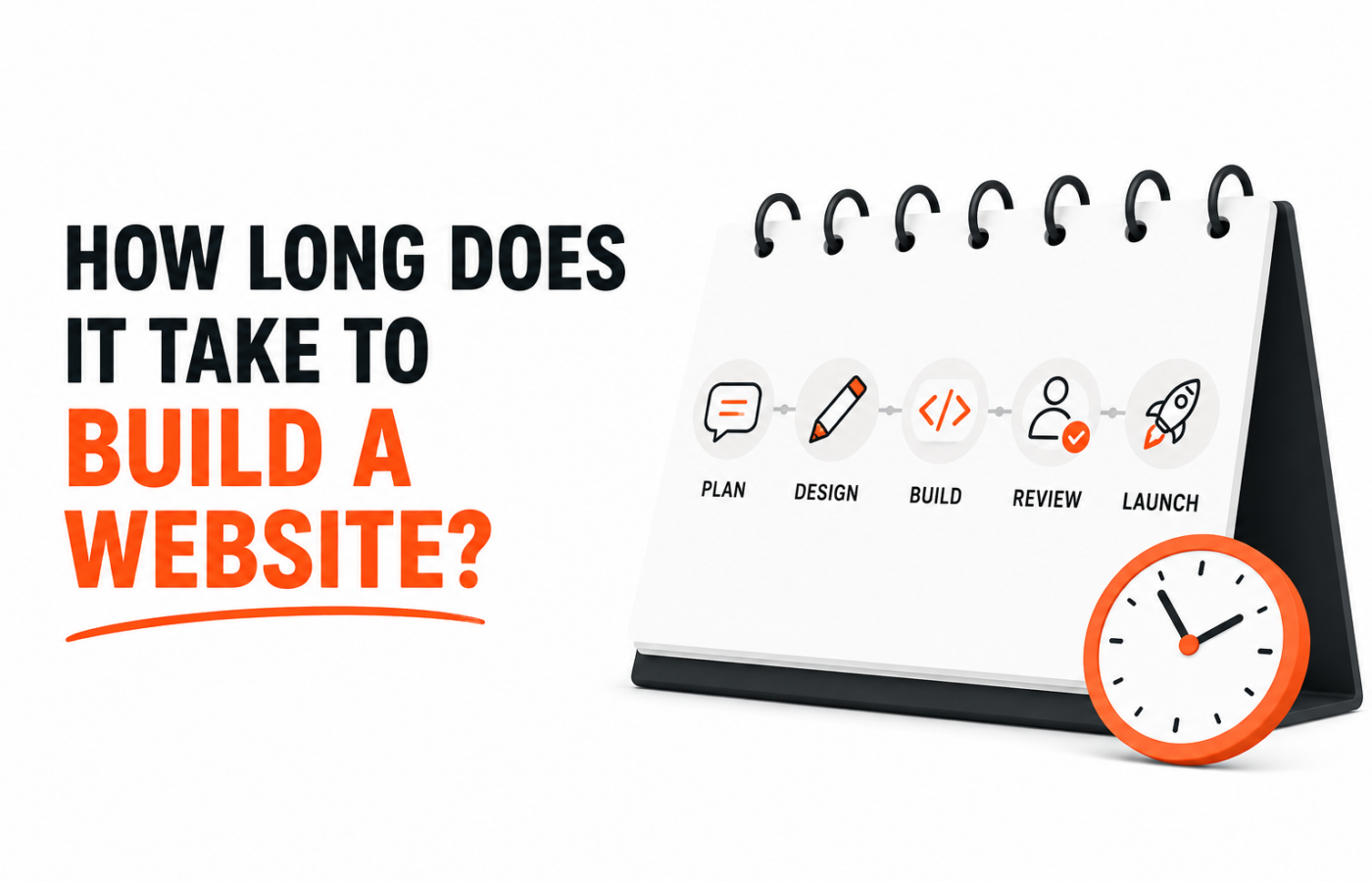
A typical sequence
Stages, not a guaranteed schedule. How long each one takes depends on the project and on how quickly decisions come back.
-
Before the clock starts
Scope
Agree what is being made, who is supplying the content, and whether design is already done.
-
Shape
Content & design
Representative content early gives you something real to design and build around.
-
Make
Build
Pages, editing and the connections the website actually needs.
-
Decide
Review
A page can take a day to build and a week to get approved.
-
Go live
Launch
Testing, the move to the live domain, and another check in the live environment.
Before the clock starts
A developer having space next month doesn't mean your website will be finished next month.
First, you need an agreed scope. What are we making? Who is supplying the content? Is there already a design, or does that need to happen too?
There may also be access to arrange. If we're replacing a site, I'll need to understand the current setup and how launch will work. Finding out late that nobody can access the domain account is an avoidable delay.
You don't have to arrive with everything solved. But the schedule should reflect what is still undecided.
The content affects the design
It's tempting to build the website first and “drop the words in later”. Sometimes that works for small changes. It becomes harder when the content changes the shape of the page.
A service with two sentences needs a different treatment from one that requires a detailed explanation and several examples. A product with multiple buying options needs more thought than a simple purchase button.
I like to get representative content early, even if every line isn't final. That gives us something real to design and build around.
If you're writing the copy yourself, leave room for it in your own diary. It can take longer than you expect when you're also running the business.
Feedback needs space in the calendar
A page can take a day to build and a week to get approved.
That isn't necessarily anyone doing a bad job. People are busy. Several people may need to look at the work, and they may not agree immediately.
But those gaps still count towards the launch date.
It helps to agree who gives the final answer and how feedback will be collected. One considered set of comments is easier to act on than separate messages arriving over several days, especially if they contradict each other.
If someone important is away during the approval stage, tell the developer early. We can plan around a known absence much more easily than an unexpected silence.
New features can change the finish date
You see the preview and have an idea. Could visitors compare products? Could the form produce a quote? Could there be a members' area?
Those might be good additions. They still need assessing.
A feature that looks small on the page can involve a fair amount behind it. Before adding it, I'd explain what it changes in the work and whether it affects the budget or timing.
Sometimes the right answer is to include it. Sometimes we agree to launch the useful first version and return to the extra feature afterwards. The important thing is making that decision openly.
“Built” and “ready to launch” aren't identical
Once the pages are in place, there's still testing and final setup.
The contact route needs checking. Content needs a final read. If it's a shop, the purchasing journey needs to be tested using an appropriate test setup before real customers use it.
Then there is the move to the live domain and another check in the live environment.
I would rather include that work in the schedule than call a preview “finished” and leave everyone wondering why launch is taking longer.
If the date is fixed
What if the deadline is fixed?
Tell me at the beginning, including why it matters.
We can work backwards from the date and decide what must be ready for it. A focused launch may be realistic even when the full wish list isn't. That could mean publishing the main service pages first and adding a larger resource section later.
The reduced version still needs to work properly. Cutting optional scope is different from skipping the checks that make the site usable.
The most useful estimate comes from a clear project and a realistic view of everyone's availability. Once those are understood, the timeline can become a plan you can actually use.